Un
laberinto
propio
Reading as a conversation with life
Un laberinto propio (“A Labyrinth of One’s Own”) is an invitation to rediscover reading as an experience with the power to transform the way we think, feel and live. It is a literary essay that blends evocation, practical knowledge and personal narrative to share some keys to the positive role of reading in our lives.
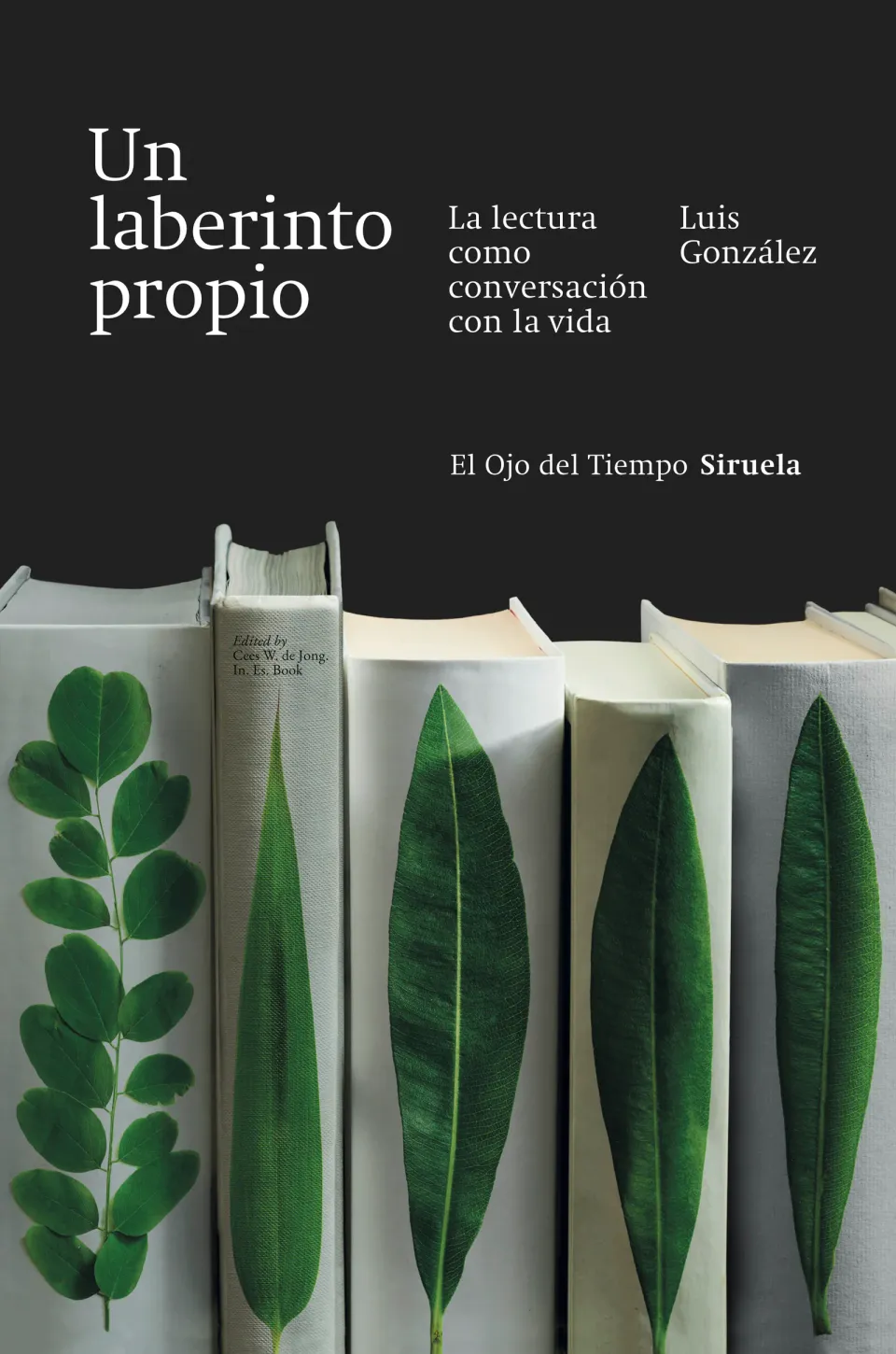
An invitation to rediscover reading
Un laberinto propio (“A Labyrinth of One’s Own”) is an invitation to rediscover reading as an experience with the power to transform the way we think, feel and live. It is a literary essay that blends evocation, practical knowledge and personal narrative to share some keys to the positive role of reading in our lives.
This book does not argue a closed thesis; it offers a score for each person to perform their own version. The labyrinth acts as the structural metaphor for an immersive experience that advances through digressions and associations between ideas and episodes, following unconventional links, in conversation with life. Every reader who enters this labyrinth will trace a path of their own.
The book’s cultural universe
Reading is also a conversation, a way of linking ideas — and that web of connections is the fundamental key to human creativity.
Contents of the book
- The power of reading, the power of digressionsReading to understand the future – Jaspers and the axial moments of history – We are citizens of the Roman Empire – Reading as divination – From Isaac Asimov’s Foundation cycle to strategic planning – How listening reverently to Cavafy may have saved lives
- Ambitious reading and the labyrinthA summer in England to learn Italian – The power of a good teacher to change your life, or to make you see that you are like Dante – The Ljubljana Manifesto – The pleasure of walking through a wooded labyrinth – The euphoria of reading the Venetian labyrinth despite Hitchcock’s birds
- Reading as a human technology for innovationReading to save calories, and as a key to civilisation – Reading as a human technology, following Ong’s ideas – Jorge Semprún’s question and the arguments of Plato’s Phaedrus against books – Karl Popper and the fall from the horse – Reading is also the key to innovation
- Effort, pleasure and healthReading as an effort for the brain – Pleasure after effort: the bicycle, music, or reading to the point of obsession with mastering something – The will to enjoy Wagner – How our context changes the reading we make of music or of a book
- Reading as artistic creationBernstein’s unique reading of Nimrod, Inés’s music – An exaggerated Anglophilia brought on by books – The Alexandria Quartet as the epitome of reading’s power to understand others – Happiness in the London labyrinth – Elizabeth Jane Howard

Luis González
Luis González has followed a hybrid professional path, always oriented towards work in the public interest. As a member of Spain’s Senior Corps of National Civil Administrators he held senior positions in several ministries. In those years he was responsible for tasks such as introducing scenario-planning systems and public investment appraisal, protecting fundamental rights, R&D in the energy field and, finally, designing and running Spain’s first National Reading Promotion Plan.
He later joined the Fundación Germán Sánchez Ruipérez to continue working with reading and books. As director general of the FGSR he collaborates with a range of Spanish and international institutions. He is vice-president of the Spanish Association of Foundations, as well as director of the reading committee of the International Publishers Association, and he was decorated with the Cross of St. Raimundo de Peñafort.
Quotes on the book
An essential book for those of us who believe in the value of reading as a mission and a commitment.
In this book I found a personal itinerary capable of revealing the alchemy of weaving ambitious reading into one’s life.
Some books inform readers and some entertain. This book does both but more importantly it is a foundation for thought and internal dialogue. It will be a classic for years to come.
“Enter this labyrinth with a curiosity like the one you would bring to wandering a new city”
El Ojo del Tiempo · Siruela · 400 pages · paperback with flaps.